
Information Literacy in Rural Telebachillerato Schools: Challenges and Opportunities in Huitiupán, Chiapas
Article Sidebar
Main Article Content
Abstract
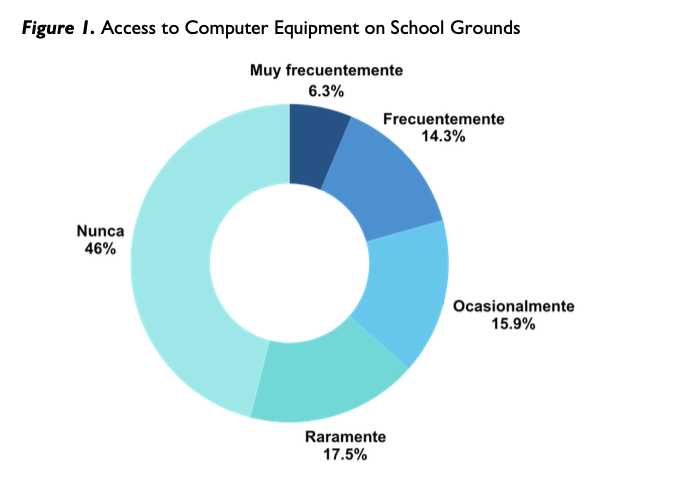
Information literacy is a fundamental competency for education regarding the access, evaluation, and ethical use of information in the digital society. In rural contexts, this process faces challenges related to technology access, connectivity, and training opportunities. The aim of this study was to analyze the information literacy level of students at a *Telebachillerato* (distance high school) in the municipality of Huitiupán, Chiapas, Mexico, identifying key challenges and opportunities for strengthening these skills. A mixed-methods study was conducted using a descriptive approach and a non-experimental, cross-sectional design. Sixty-three students participated, completing a structured questionnaire covering six dimensions: technological access and availability, basic ICT skills, information competencies, educational use of technology, digital security and citizenship, and self-assessment of digital competencies. Additionally, six semi-structured interviews and an observation guide were used to complement and triangulate the data. The results show that, while most students have smartphones and home internet access, persistent limitations in the school's technological infrastructure restrict the pedagogical use of ICT. Furthermore, the study found that students possess basic digital skills and use technology for academic purposes; however, they need to strengthen competencies related to searching for, evaluating, and ethically using information. It is concluded that developing digital competencies is a necessary but insufficient condition for fostering information literacy; therefore, it is essential to promote institutional strategies aimed at strengthening these competencies in rural Telebachilleratos.
Downloads
Article Details

This work is licensed under a Creative Commons Attribution-NonCommercial-ShareAlike 4.0 International License.
License Agreement
This journal offers free access to its content via its website, following the principle that making research freely available to the public promotes greater global knowledge exchange.
The content of the journal's website is distributed under a CC BY-NC-SA 4.0
References
Area Moreira, M. (2012). La alfabetización en la sociedad digital. En M. Area Moreira, A. Gutiérrez Martín, & F. Vidal Fernández, Alfabetización digital y competencias informacionales (pp. 3-42). Fundación Telefónica; Ariel. Disponible en: https://dialnet.unirioja.es/servlet/libro?codigo=555922
Area Moreira, M. (2015). La alfabetización digital y la formación de la ciudadanía del siglo XXI. Integra Educativa, 7(3), 21-33. Disponible en: http://www.scielo.org.bo/scielo.php?pid=S199740432014000300002&script=sci_abstract
Freire, P. (2022). Pedagogía del oprimido. Siglo XXI. México.
Fueyo Gutiérrez, A., Rodríguez Hoyos, C., & Hoechsmann, M. (2018). Construyendo ciudadanía global en tiempos de neoliberalismo: Confluencias entre la educación mediática y la alfabetización digital. Revista Interuniversitaria de Formación del Profesorado, 32(1), 57-68. Disponible en: https://www.redalyc.org/journal/274/27454937005/html/
García Ávila, S., (2017). Alfabetización Digital. Razón y Palabra, 21 (98), 66-81.
Grajales González, E. (2024, 21 de diciembre). Telebachillerato en Chiapas: una opción que hace historia. SDP Noticias. https://www.sdpnoticias.com/opinion/telebachillerato-en-chiapas-una-opcion-que-hace-historia/
Gómez Navarro, Dulce Angélica, Alvarado López, Raúl Arturo, Martínez Domínguez, Marlen, & Díaz de León Castañeda, Christian. (2018). La brecha digital: una revisión conceptual y aportaciones metodológicas para su estudio en México. Entreciencias: diálogos en la sociedad del conocimiento, 6(16), 47-62. Epub 04 de agosto de 2020.https://doi.org/10.22201/enesl.20078064e.2018.16.62611
Hernández-Campillo, TR, Veranes Gálvez, L., & Arias Hidalgo, AB (2023). La Alfabetización Informacional en las carreras pedagógicas cubanas. Información, cultura y sociedad: revista del Instituto de Investigaciones Bibliotecológicas , (49), 9-33. https://doi.org/10.34096/ics.i49.12665
INEGI, (2021).Panorama sociodemográfico de México. Chiapas. Instituto Nacional de Estadística y Geografía. Disponible en: https://www.inegi.org.mx/contenidos/productos/prod_serv/contenidos/espanol/bvinegi/productos/nueva_estruc/702825197780.pdf
Lyotard, J-F. (1979). La condition postmoderne: rapport sur le savoir. Les Éditions de Minuit, Londres.
Secretaría de Educación Pública. (2025). Modelo Educativo 2025: Marco Curricular Común de la Educación Media Superior (MCCEMS). Gobierno de México. https://www.gob.mx/cms/uploads/attachment/file/1023480/2025_1_BN_MODELO_EDUCATIVO_2025_MCCMS.pdf
Telebachillerato Estatal de Chiapas. (s. f.). Conócenos. https://telebachilleratoenchiapas.gob.mx/conocenos/
Quintanilla, M. Á., (2007). La investigación en la sociedad del conocimiento. Revista Iberoamericana de Ciencia, Tecnología y Sociedad - CTS , 3 (8), 183-194.
UNESCO. (2005). Hacia las sociedades del conocimiento: Informe mundial de la UNESCO. Ediciones UNESCO. Disponible en: https://unesdoc.unesco.org/ark:/48223/pf0000141908/PDF/141908spa.pdf.multi
UNESCO. (2021). Normas mundiales sobre las directrices para la elaboración de planes de estudio de alfabetización mediática e informacional. UNESCO. https://www.unesco.org/sites/default/files/medias/files/2022/02/Global%20Standards%20for%20Media%20and%20Information%20Literacy%20Curricula%20Development%20Guidelines_ES.pdf