
Multiple Representations and Meaningful Learning in Mathematics Education During the Transition to Higher Education
Article Sidebar
Main Article Content
Abstract
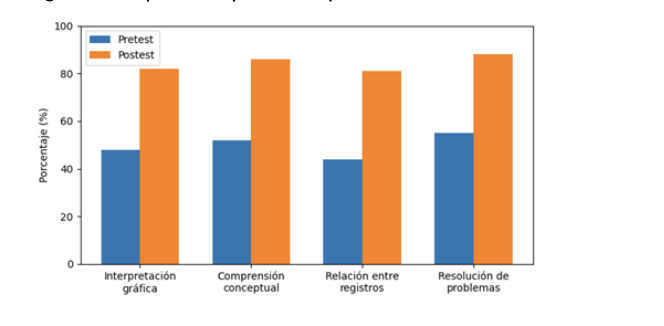
The transition from secondary education to higher education represents one of the major challenges in students’ mathematical development. During this stage, many first-year university students experience difficulties in understanding fundamental mathematical concepts due to limited connections among different forms of mathematical representation and the predominance of procedural learning approaches. In this context, the present study aimed to analyze the contribution of multiple representations to meaningful learning of mathematical concepts among first-year university students. A mixed-methods approach with a quasi-experimental design was employed, involving students enrolled in introductory Mathematics and Precalculus courses. The instructional intervention was grounded in Duval’s theory of semiotic representation registers and Ausubel’s theory of meaningful learning, incorporating activities that promoted the integration of algebraic, graphical, numerical, tabular, and verbal representations. The findings revealed significant improvements in conceptual understanding, graphical interpretation, coordination among representation registers, and mathematical problem-solving skills. In addition, students reported positive perceptions of the instructional strategies, emphasizing that the use of multiple representations facilitated content comprehension and supported the construction of meaningful knowledge. The study concludes that multiple representations constitute an effective pedagogical strategy for enhancing meaningful learning in mathematics during the transition to higher education. Furthermore, they contribute to the development of mathematical reasoning, conceptual understanding, and the application of knowledge in diverse contexts. These findings provide relevant evidence for the design of educational practices aimed at improving mathematics teaching and learning in the early years of university education.
Downloads
Article Details

This work is licensed under a Creative Commons Attribution-NonCommercial-ShareAlike 4.0 International License.
License Agreement
This journal offers free access to its content via its website, following the principle that making research freely available to the public promotes greater global knowledge exchange.
The content of the journal's website is distributed under a CC BY-NC-SA 4.0
References
Ainsworth, S. (1999). The functions of multiple representations. Computers & Education, 33(2–3), 131–152. https://doi.org/10.1016/S0360-1315(99)00029-9
Ainsworth, S. (2006). DeFT: A conceptual framework for considering learning with multiple representations. Learning and Instruction, 16(3), 183–198. https://doi.org/10.1016/j.learninstruc.2006.03.001
Arcavi, A. (2003). The role of visual representations in the learning of mathematics. Educational Studies in Mathematics, 52(3), 215–241. https://doi.org/10.1023/A:1024312321077
Ausubel, D. P. (2002). Adquisición y retención del conocimiento: Una perspectiva cognitiva. Paidós.
Borba, M. C., Askar, P., Engelbrecht, J., Gadanidis, G., Llinares, S., & Aguilar, M. S. (2016). Blended learning, e-learning and mobile learning in mathematics education. ZDM Mathematics Education, 48(5), 589–610. https://doi.org/10.1007/s11858-016-0798-4
Carlson, M. P., Oehrtman, M., & Engelke, N. (2010). The precalculus concept assessment: A tool for assessing students’ reasoning abilities and understandings. Cognition and Instruction, 28(2), 113–145. https://doi.org/10.1080/07370001003676587
Di Martino, P., Gregorio, F., Iannone, P., & Speer, N. (2023). Research on the transition to university mathematics: A systematic review. Educational Studies in Mathematics, 112(1), 1–29. https://doi.org/10.1007/s10649-022-10177-9
Duval, R. (2006). A cognitive analysis of problems of comprehension in a learning of mathematics. Educational Studies in Mathematics, 61(1–2), 103–131. https://doi.org/10.1007/s10649-006-0400-z
Kaput, J. J. (1989). Linking representations in the symbol systems of algebra. En C. Kieran & S. Wagner (Eds.), Research issues in the learning and teaching of algebra (pp. 167–194). Lawrence Erlbaum Associates.
Koskinen, P., & Pitkäniemi, H. (2022). Meaningful learning in mathematics education: A review of recent research. Education Sciences, 12(5), 327. https://doi.org/10.3390/educsci12050327
Lesh, R., Post, T., & Behr, M. (1987). Representations and translations among representations in mathematics learning and problem solving. En C. Janvier (Ed.), Problems of representation in the teaching and learning of mathematics (pp. 33–40). Lawrence Erlbaum Associates.
Niss, M., & Højgaard, T. (2019). Mathematical competencies revisited. Springer. https://doi.org/10.1007/978-3-030-14792-2
Polman, R. C. J., Gebre, E. H., & Penuel, W. R. (2021). Meaningful learning and student engagement in STEM education. International Journal of STEM Education, 8(1), 1–15. https://doi.org/10.1186/s40594-021-00279-4
Presmeg, N. (2006). Research on visualization in learning and teaching mathematics. En A. Gutiérrez & P. Boero (Eds.), Handbook of Research on the Psychology of Mathematics Education (pp. 205–235). Sense Publishers.
Rau, M. A., Aleven, V., & Rummel, N. (2015). Successful learning with multiple representations and self-explanation prompts. Journal of Educational Psychology, 107(1), 30–46. https://doi.org/10.1037/a0037217
Trujillo, C., Ribeiro, M., & Gómez-Chacón, I. M. (2023). Functions as threshold concepts in university mathematics learning. International Journal of Mathematical Education in Science and Technology, 54(7), 1321–1339. https://doi.org/10.1080/0020739X.2022.2123456